What’s the difference between building a park and building a place people actually love?
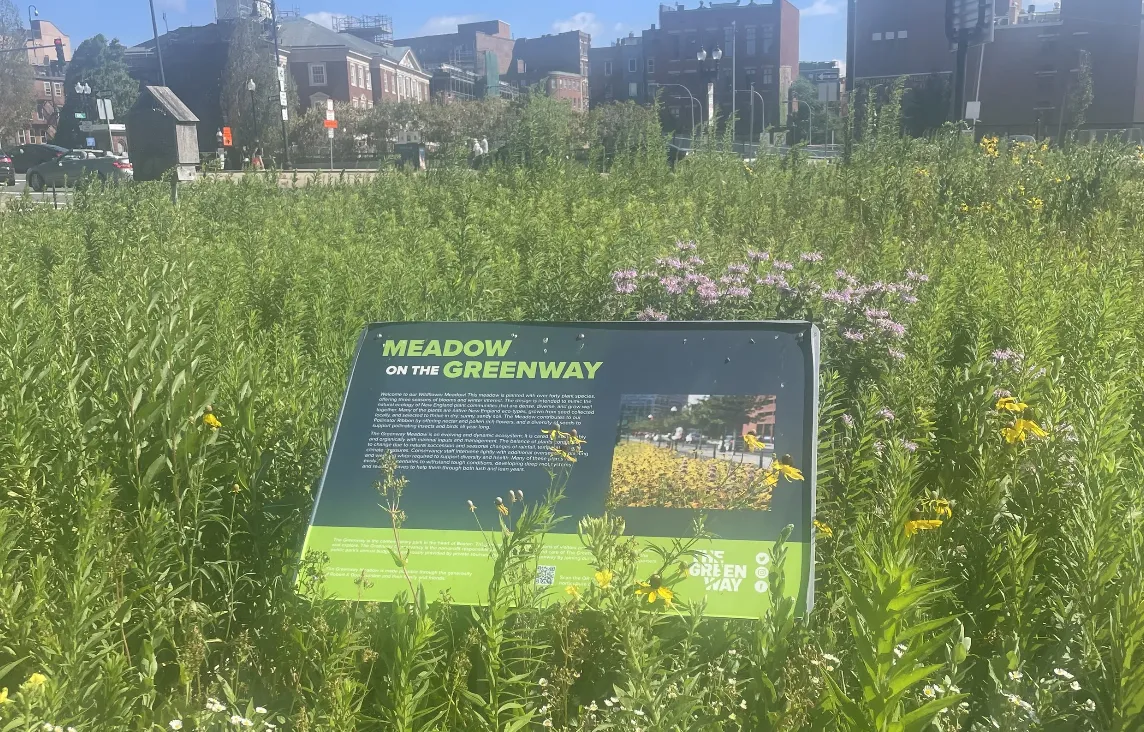
Since I got back from a trip to Boston where I spent a morning walking the Rose Kennedy Greenway, I've been replaying this very question. I have the unique perspective of having been a resident in Boston and experienced life before the RKG and after it became an epicenter of downtown. This trip I was looking at it with fresh eyes now that I’m involved with the Lowline and had my family in tow. The Rose Kennedy Greenway is a linear park, like ours will be, threading through several neighborhoods on land that used to be defined by a highway. Watching how much daily life it holds inspired the kind of place I hope we're building here on the peninsula.
It's easy to picture a great park moment as the big annual festival: the sponsor banners, the crowd photo everyone shares. Those events are wonderful, and a big part of my previous job as the Director of Programs for the Charleston Parks Conservancy- shout out to Light the Lake 2023 (IYKYK). But they're not what turns a park into a habit. A once-a-year festival brings people together for a holiday or afternoon. A weekly yoga class or a Tuesday morning market brings the same neighbors back to the same spot, again and again, until they start recognizing each other's faces. That's the moment a park stops being a venue and starts being something closer to a shared backyard.
Here’s a roundup of a other great parks and public spaces across North America we have pinned to the vision board:
Klyde Warren Park in Dallas built its whole identity around this idea. It's a 5.4-acre deck park over a sunken freeway, and its foundation runs more than 1,300 free programs a year: yoga, tai chi, dance lessons, family activities, live music. None of it is ticketed. The park now welcomes more than two million visitors annually, and Cigna signed on for two years as the exclusive sponsor of the park's entire fitness lineup, presenting "Health and Wellness at Klyde Warren Park."
195 District Park in Providence takes a smaller, more intimate approach on its seven waterfront acres. A weekly outdoor market. A seasonal beer garden. An ice cream stand by the river. The Providence Flea sets up there, and PVDFest uses it as a stage. None of these are massive productions on their own, but stacked together across a calendar, they give people a reason to walk down to the water more than once a summer.
The Bentway in Toronto, tucked into the space beneath an elevated expressway, leans fully into everyday rhythm: a figure-eight skate trail open daily in winter (sounds dreamy as our heat index climbs to 112), weekly roller skate lessons, monthly art workshops. What I find most hopeful about their model is how directly the joyful parts and the sustainable parts are connected. The Bentway rents out its spaces for private events, and that income is what keeps the free programming and daily upkeep going year-round.
And then there's the Rose Kennedy Greenway in Boston, the one I have the deepest personal connection to. It's a 17-acre linear park built on top of a highway tunnel, running through the North End, Chinatown, the Financial District, and the Waterfront. VIsting this summer with a different outlook what struck me most was the sheer density of daily life: free outdoor yoga and fitness classes in the morning, a rotating lineup of nearly 20 food trucks every single day, a hand-carved carousel open year-round, beer gardens, and a full calendar of festivals through summer and fall. A food truck. A yoga mat. A carousel ride. Together, on an ordinary afternoon, they add up to a park that never feels empty and never feels like it's trying too hard.
Four very different parks, four very different budgets, and the same quiet truth underneath all of them: build the everyday rhythm first, and the big moments take care of themselves.
Programming doesn't happen on its own once a park is built. Someone has to imagine it, plan it, and keep showing up to make it real, week after week, season after season. In every place above, that someone was a dedicated nonprofit partner walking alongside the city, not instead of it.
I think that's a role Friends of the Lowline is uniquely built for. We already sit at the center of eight neighborhoods, the City of Charleston, and the residents and businesses who care about this corridor. We're not anchored to one block or one zip code, which means we get to imagine a calendar that belongs to every neighborhood, all at once.
Tell us what you want to see
When we launch our new website later this month we invite you to visit our programming survey, so we can hear directly from the community about what you want your park to be. Stay tuned!